Air Bending vs. Bottoming and Coining – Mechanics, Tolerances, and Tonnage Thresholds
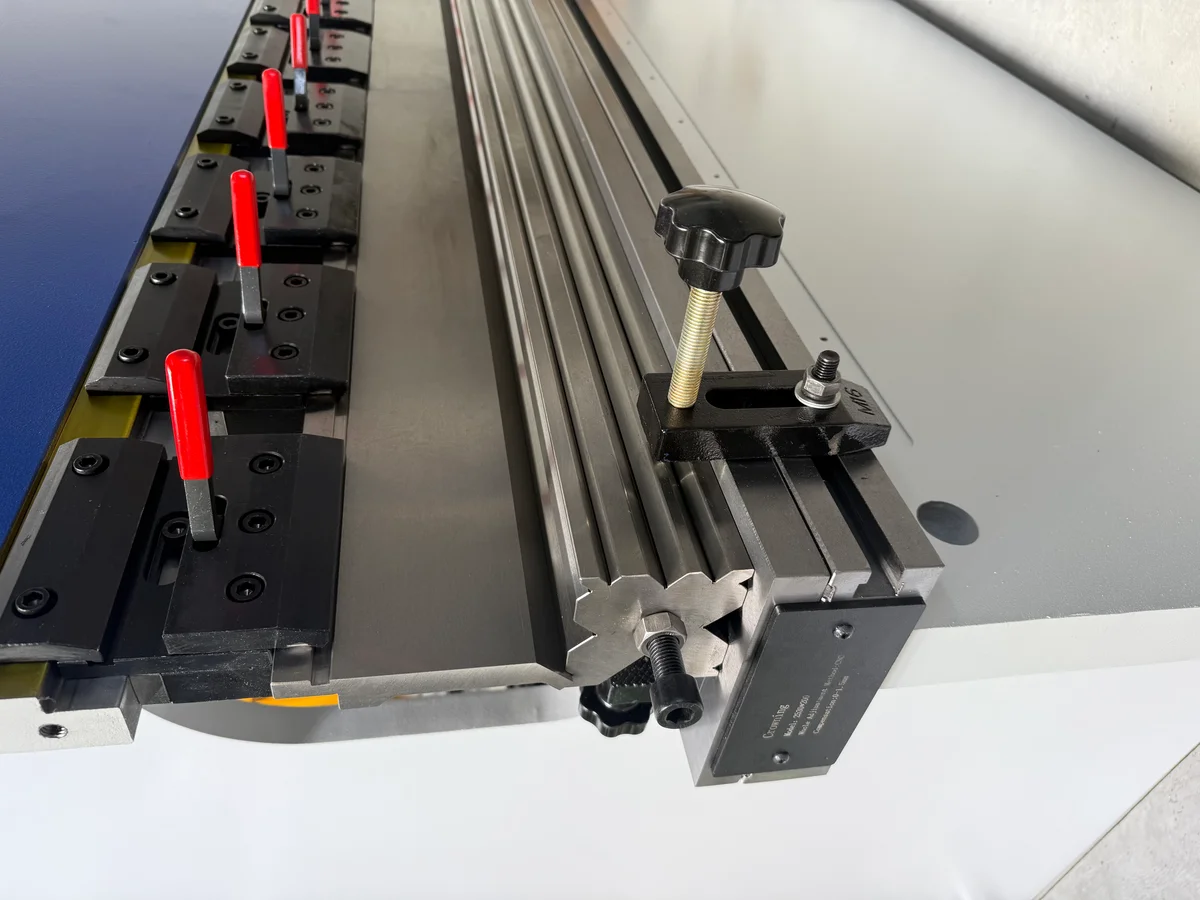
Choosing the right bending method is critical for achieving accuracy and protecting tooling. This article analyzes air bending, bottoming, and coining mechanics.
In sheet metal fabrication, achieving consistent bend angles is a fundamental requirement. On a CNC press brake, operators can utilize three primary bending methods: air bending, bottoming, and coining.
Each method relies on different physical mechanics, requires distinct tonnage thresholds, and delivers different levels of accuracy. For production managers and B2B buyers looking to optimize throughput and extend tool life, selecting the appropriate bending method is key to operational efficiency.
Mechanics of Bending Methods
1. Air Bending
In air bending, the punch presses the sheet metal into the V-die cavity, but the material does not contact the bottom of the V. The final bend angle is determined solely by the depth of penetration of the punch.
Air Bending
The punch pushes the metal into the die cavity without contacting the bottom. The bend angle is controlled entirely by punch penetration depth.
Contact: Punch Tip & 2 Die Edges
Bottoming
The punch presses the metal directly against the bottom of the V-die. The bend angle is set by the physical angle of the tooling.
Contact: Full Die Surface Squeeze
Coining
The punch and die stamp the material under extreme pressure, causing plastic flow at the bend radius. Eliminates springback completely.
Contact: Extreme Surface Penetration
- Tool Versatility: A single tool set (punch and die) can bend multiple angles (e.g., from 30° to 175°) simply by adjusting the CNC stroke depth.
- Tonnage Efficiency: Air bending requires the lowest tonnage of all three methods, allowing shops to process thicker plates on smaller-capacity machines.
2. Bottoming (Bottom-Pressing)
In bottoming, the punch presses the material against the bottom of the V-die. The sheet metal conforms to the angle of the punch and die (typically 90°).
- Springback Management: Bottoming reduces springback because the material is squeezed under pressure between the punch tip and the die walls. Standard springback drops from 3°-5° (in air bending) to approximately 1°-2°.
- Tonnage Requirement: Bottoming requires 3 to 5 times more force than air bending.
3. Coining
Coining is a high-force stamping process where the punch and die physically stamp the sheet metal, penetrating beyond its yield strength to flow the metal plastically.
- Maximum Precision: Coining eliminates springback entirely, delivering tolerances of ±0.5° or better. The inner radius of the bend is permanently stamped into the metal.
- Tonnage Thresholds: Coining requires extreme pressures, typically 5 to 10 times more tonnage than air bending.
Technical Comparison of Bending Methods
To help plant managers choose the right method for their parts, the table below highlights the operating requirements for each bending process:
| Operating Parameter | Air Bending | Bottoming | Coining |
|---|---|---|---|
| Bending Pressure (Tonnage) | Low (1x base force) | Medium (3x to 5x force) | Extreme (5x to 10x force) |
| Angle Versatility | High (any angle per V-die) | Low (fixed by tool angle) | None (must match die exactly) |
| Angle Tolerance | ±1.0° to ±1.5° | ±0.5° to ±1.0° | ±0.2° to ±0.5° |
| Tooling Wear Rate | Low | Medium | High (extreme surface stress) |
| Springback Rate | 3.0° to 5.0° (requires compensation) | 1.0° to 2.0° | 0.0° (fully eliminated) |
| Ideal Thickness Range | Any (excellent for thick plates) | Thin sheets (< 2.0 mm) | Very thin sheets (< 1.2 mm) |
Tonnage Calculations and Die Width Selection
1. Determining V-Die Width (The 8x Rule)
For standard steel bending, the width of the V-die opening ($V$) is selected based on the material thickness ($t$). Selecting the correct die width determines the required bending tonnage:
- Thin Sheet Metal (t < 3 mm): V = 8 × t
- Medium Sheet Metal (3 mm ≤ t < 6 mm): V = 10 × t
- Thick Sheet Metal (t ≥ 6 mm): V = 12 × t
2. Air Bending Tonnage Formula
For mild steel (tensile strength 450 MPa), the required bending force (F) in tons per meter can be calculated using the following formula:
F = (1.42 × σu × t2) / V
F: Required force (tons/meter)
σu: Material tensile factor (1.0 for mild steel, 1.5 for stainless)
t: Material thickness (mm)
V: V-die opening width (mm)
Using this formula, bending a 4.0 mm plate on a 32 mm V-die ($V = 8 \times t$) requires:
F = (1.42 × 1.0 × 16) / 32 = 0.71 × 40 = 28.4 tons per meter
If coining or bottoming is used, this required tonnage must be multiplied by the respective safety factors (3x for bottoming, 8x for coining), which quickly exceeds the machine’s safe operating limits and accelerates tool wear.
B2B Operational and Maintenance Strategy
1. Tooling Integrity and Selection
Using air bending protects your press brake tooling from excessive wear. Because the punch does not bottom out, the tool faces experience lower frictional heating and wear. For shops doing bottoming or coining, tooling must be made of premium hardened tool steel (minimum HRC 48-52) to prevent tool deformation and cracking.
2. Deflection Management
High-force bending causes the press brake frame to deflect. If coining is used, the frame deflection will cause the center of the bed to bend away from the punch, resulting in a canoe effect (where the bend is tighter at the ends of the sheet than in the center).
To prevent this, press brakes must have active crowning systems (either hydraulic or mechanical) to offset the deflection.
Technical Consultation and Engineering Support
At RAXMEK, we engineer our CNC press brakes with high-grade components, heavy-duty frames, and advanced controller options to support your fabrication needs.
Our engineering team is ready to assist you in selecting the ideal bending setup. We provide:
- Tooling Optimization: Analyzing your drawings to configure custom punch profiles and multi-V die holders.
- Tonnage Audits: Calculating bending tonnage profiles for high-strength steel or thick-plate parts to ensure safe operation.
- Detailed Quotes: Comprehensive machine specifications, detailing backgauge options, crowning integrations, and tooling packages.
Contact RAXMEK today to consult with our technical team and improve your bending precision.
الموارد ذات الصلة
CNC Press Brake Crowning Systems – Hydraulic vs. Mechanical Deflection Compensation for High-Precision Metal Bending
In precision sheet metal bending, frame deflection directly affects angle consistency across the bending length. This article examines the mechanical differences, PID feedback...
CNC Press Brake Backgauge Systems – Comparing Multi-Axis (X, R, Z1, Z2, X1, X2) Drive Configurations and Their Impact on Bending Accuracy
A deep dive into press brake backgauge axes, drive kinematics, and linear transmission systems. Learn how multi-axis (X, R, Z1, Z2, X1, X2) setups improve production speed...
Mandrel Selection and Placement Kinematics – Preventing Wrinkling, Ovality, and Wall Thinning in Thin-Walled Tube Bending
High-quality tube bending requires careful management of internal and external forces. This article explores mandrel types, wiper die settings, and mandrel insertion depth...